
By Michaela Brownell

There is a tendency to summarize Jane Eyre down to the romance between the titular character and Mr. Rochester. If there’s a bit more room people may discuss the red room or the madwoman in the attic. What is often overlooked are the chapters where Jane attends Lowood. When I read Jane Eyre for the first time, the Lowood chapters were some of my favorites. However, the rest of the world doesn’t seem to hold the same opinion: movie adaptions skim over these passages and academia stays clear of the subject. If addressed at all, it is only to condemn the conditions of the school. Perhaps some of this can be attributed to Charlotte Bronte’s own experience in schooling. Many people are convinced that Lowood is meant to represent the school Bronte herself attended as a child: Cowan Bridge. One former teacher at the school, fearing misrepresentation, even penned a letter to the editor, being “most anxious to vindicate an Institution, which has been… a blessing of inestimable value” (Littell’s Living Age, 652). Many seem to regard Jane’s time at Lowood as a period of suffering, but I argue quite the opposite. The Lowood chapters represent not a period of continued misery, rather they are a period of remarkable and positive change for Jane. Having Jane go through this period of change is revolutionary not only for the genre, but also for Jane as a character. The Lowood chapters bring a great deal of depth to Jane Eyre as both character and novel and their importance has long gone unnoticed.
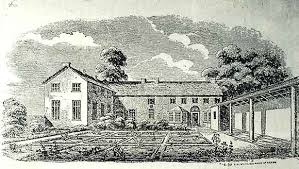
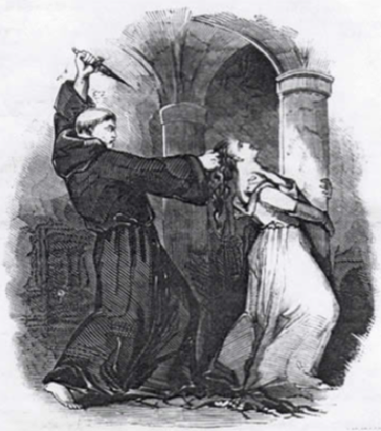
Character development is not something commonly seen in the Gothic novel, and certainly not in its female characters. Female characters in the Gothic genre are unchanging, they do not learn or grow. Consider The Castle of Otranto’s Matilda and Isabella as well as The Monk’s Antonia. All three are perfect and pure. They do not grow as characters because how can perfection be improved upon? However, perfection can be rather limiting. Consider again these three characters, are they really anything beyond their virtue? If you take away their purity, is there anything much left to them? Furthermore, in being perfect they exist solely to be acted upon by others, they cannot act for themselves. They read, they sew, they pray, but they do not live for themselves. They live so that they can be married or killed.
Jane is not this perfect being. Jane makes mistakes, but she does so in order that she may learn from them and grow. She is not static, she is ever evolving. Because we are witness to this change, we as readers become more attached to her as a character. We want her to succeed because we have seen what she has already overcome. Lowood is the place where Jane experiences the most change and growth because she is placed in situations that are congruent to such a change happening. In situating Jane against the previously named characters, it becomes clear why change is so important. Having the ability to change means that she is in charge of her own actions. Jane is fully in control of her own being, she has flaws, she grows and develops, and because of this we are more connected to her than to traditional Gothic heroines. As she grows, so does our attachment to her as a character.

The growth Jane sees because of her time at Lowood comes in three major areas. First, the character she developed because of her childhood trauma is corrected. Second, she learns important life lessons. Last, she is given the tools to become sensible and independent. While she certainly can’t be blamed for it, Jane arrives at Lowood with an overdeveloped sense of justice. She is quick to seek retribution against those that have wronged her. When confronting Mrs. Reed for calling her a liar, Jane describes, “that eye of hers, that voice, stirred every antipathy I had. Shaking from head to foot, thrilled with ungovernable excitement, I continued” (Bronte, 44). Jane furthers her quest for justice, saying to Mrs. Reed, “you think I have no feelings, and that I can do without one bit of love or kindness; but I cannot live so: and you have no pity” (44). Mrs. Reed treats Jane with cruelty, showing her no love or kindness, always accusing her of wickedness. Having grown up under such conditions, it is no wonder why Jane became so defensive. However, she could not continue this behavior at Lowood or in life. When talking to Helen, Jane tells her that “when we are struck without a reason, we should strike back again very hard,” (68) a lesson that she learned as a result of her upbringing. Helen responds that “it is not violence that best overcomes hate– nor vengeance that most certainly heals injury” (69). Through these lessons with Helen, Jane is tempered. One cannot go through life constantly striking out against those who seek to wrong you, one must be cool-headed in the face of adversity.

Margaret Lenta writes that Jane “goes to Lowood more in need of loving care than of education, and is fortunate that in Miss Temple she finds both” (Lenta, 41). While deprived of the material comforts of Gateshead Hall, Jane is fortunate to receive the love that she always needed but was never given before. She finds friends, people who are willing to help her grow, and people who believe in her goodness. Living at Gateshead Jane remarks, “all said I was wicked, and perhaps I might be so” (19). Everyone assumed the worst of her, she had no one to support or believe her. She was considered guilty before a crime was even committed. While the Reeds were against her, at Lowood she learns that that is not the case of everyone. Consider the incident where Mr. Brocklehurst declares to the school that, per the word of Mrs. Reed, Jane is a liar. Jane is used to being a scapegoat, she is then surprised when she is given the chance to calmly defend herself by Miss Temple. Miss Temple tells her, “when a criminal is accused, he is always allowed to speak in his own defense. You have been charged with falsehood; defend yourself to me as well as you can” (84). Jane has never been given an impartial chance to defend herself. This scene shows her that the whole world does not view or treat her as the Reed household did. She no longer has to fight for her own justice.
Of those that do mention Jane’s school days, they often focus on the skills she gains so she can seek employment as a governess. Having these skills means that she can work independently to support herself. As Jane remarks:
During those eight years my life was uniform, but not unhappy, because I was not inactive. I had the means of an excellent education placed within my reach; a fondness for some of my studies, and a desire to excel in all, together with a great delight in pleasing my teachers, especially such as I loved, urged me on. In time I rose to be the first girl of the first class; then I was invested with the office of teacher; which I discharged with zeal for two years. (100)
Jane has gained a high level of skill because of her education as well as a great desire to succeed. This combination of work ethic, skill, and determination has prepared her to fend for herself in the outside world.

She is no longer dependent on the Reeds who abhorred her so much. At Lowood, she is still connected to the Reeds, which is why, before pursuing her new career, “Mrs. Reed must be written to, as she was [Jane’s] natural guardian” (106). When the letter returns, Jane is told that “I might do as I pleased: she had long relinquished all interference in my affairs” (106). This letter formally severs Jane’s reliance on the Reeds. She is free to go her own way and live her own life. But she would not have been able to do this were it not for the education she received at Lowood, both in and out of the classroom.
Without the Lowood chapters we wouldn’t have a clear picture of Jane, we wouldn’t truly understand her. Adult Jane seems very different from the typical gothic heroine. She does not scream at shadows, faint, or fall into fits. She does not cry delicate tears after hearing a beautiful sermon. Her value does not come from her being fair and lovely. If we go into the novel with traditional gothic assumptions of what a heroine should act and be like, Jane might come off as a bit aloof. She does not seem to have strong feelings nor possess the typical feminine graces. However, as Jane says herself, “you think I have no feelings, and that I can do without one bit of love or kindness; but I cannot live so” (44). The Lowood chapters show that Jane cares and feels deeply, she has just learned how to be sensible. In having these chapters, we are made aware of not only how Jane has suffered, but how she has overcome and grown from it. Without Lowood, Jane would always be the child who lashes out from hurt. She would not know love or friendship, and she would always be dependent on the Reeds. She has learned to fend for herself and because of it she won’t settle for less. She has been through Hell and emerged a better and stronger person. She knows she can face anything, and we admire her for it.

Works Cited
Brontë Charlotte. Jane Eyre. Penguin, 2006.
A, H. “”JANE EYRE” AND THE SCHOOL AT COWAN BRIDGE.” Littell’s Living Age (1844-1896), vol. 10, no. 590, Sep 15, 1855, pp. 652. ProQuest, https://login.ezproxy.stthomas.edu/login?url=https://search-proquest-com.ezproxy.stthomas.edu/docview/90316639?accountid=14756.
Lenta, Margaret. “Jane Fairfax and Jane Eyre: Educating Women.” ARIEL: A Review of International English Literature, vol. 12, no. 4, Oct. 1981, pp. 27–41.
 The Gothic Novel